Introduction
Rehabilitation has evolved significantly from basic exercise routines to structured programs that combine clinical expertise, progressive movement, and specialized technology. Whether a patient is recovering from an injury, surgery, neurological condition, or reduced mobility, physiotherapy aims to help restore function and improve confidence in movement.
In this changing environment, physiotherapy equipments provide therapists with practical ways to make rehabilitation more controlled, measurable, and adaptable. The right equipment does not replace professional assessment; instead, it complements the therapist’s approach by creating opportunities for progressive exercise and functional training.
Why Physiotherapy Equipment Matters in Modern Rehabilitation
Every patient’s rehabilitation journey is different. Someone recovering from a joint procedure may need gradual mobility and strengthening exercises, while an athlete may require advanced resistance and performance training. Patients with balance or coordination challenges may require an entirely different approach.
Physiotherapy equipment allows therapists to adjust exercises according to these differences. Resistance can be increased gradually, movements can be supported when necessary, and activities can become more challenging as the patient improves.
Equipment can also help create a more organized therapy environment. Instead of relying exclusively on manual exercises, therapists can combine different tools to address strength, flexibility, balance, endurance, and functional movement within one rehabilitation program.
Key Physiotherapy Equipments and Their Applications
A modern rehabilitation facility may use several categories of physiotherapy equipments, depending on its patient population and services.
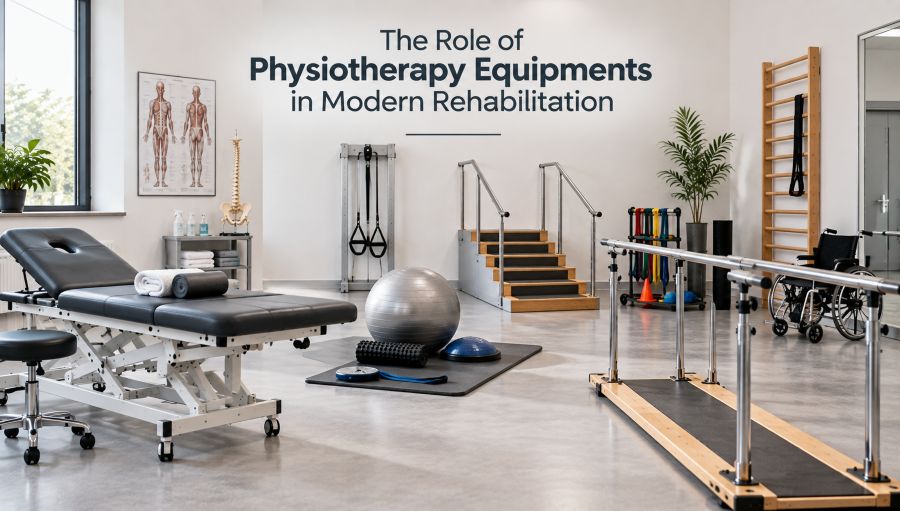
Therapeutic exercise equipment such as resistance bands, weights, exercise cycles, and strengthening machines can support progressive muscle conditioning. Adjustable resistance makes these tools useful for patients at different stages of recovery.
Mobility and gait-training equipment such as parallel bars, walking aids, and therapy steps can help patients practice movement with an appropriate level of support. These tools are particularly useful when rebuilding walking confidence and coordination.
Balance and stability equipment can be incorporated into rehabilitation programs that focus on postural control and coordination. Balance boards, stability platforms, and similar tools allow therapists to introduce controlled challenges.
Electrotherapy and therapeutic modality equipment may also form part of selected treatment programs. Their use should be determined by qualified professionals based on patient assessment and appropriate clinical protocols.
The goal is not to use the maximum amount of equipment, but to select tools that contribute meaningfully to specific rehabilitation objectives.
Technology and Personalised Rehabilitation
One of the notable developments in rehabilitation is the growing use of technology-assisted equipment. Digital resistance systems, movement-monitoring tools, interactive exercise platforms, and other technology-enabled solutions can provide therapists with additional ways to structure and track rehabilitation.
Personalisation is becoming increasingly important. Equipment that offers adjustable settings can accommodate changes in strength, mobility, endurance, and exercise tolerance over time.
However, technology should serve a clinical purpose rather than simply add complexity. Before investing in advanced Medical Equipment, rehabilitation centers should consider whether the features genuinely improve treatment workflows or patient engagement.
Choosing Reliable Physiotherapy Equipment Suppliers
The quality of rehabilitation equipment is closely connected to the supplier chosen by a healthcare facility. Reliable physiotherapy equipment suppliers should provide clear information about product specifications, intended applications, maintenance, and operating requirements.
When comparing suppliers, clinics should consider durability, warranty coverage, technical support, installation, servicing, replacement components, and staff training. These factors can have a significant effect on the equipment’s long-term value.
A Medical Equipment Supplier such as SRG Medical Equipment and Supplies may be considered during the evaluation process when rehabilitation centers compare equipment based on their clinical requirements, facility size, and budget.
Conclusion
Modern rehabilitation combines professional expertise with tools that make movement training progressive and adaptable. From strengthening and mobility equipment to balance systems and technology-assisted solutions, physiotherapy equipments can support therapists across different stages of patient recovery.
Healthcare facilities should select equipment according to clinical objectives, patient needs, safety, usability, and long-term maintenance requirements. Working with dependable physiotherapy equipment suppliers can make procurement and ongoing support more manageable. Rehabilitation centers can consider providers such as SRG Medical Equipment and Supplies while comparing Medical Equipment that fits their specific therapy environment.